
Indonesia stretches far beyond Bali’s beaches and Jakarta’s skyline, offering hundreds of quieter, lesser-known destinations across the archipelago. From quiet islands shaped by centuries of maritime culture to towns where traditional craftsmanship still anchors daily life, these places reveal a slower, more intimate side of the country.
They hum at their own pace, shaped by tradition and community life. And for travellers staying at Wyndham resorts in Indonesia, many of the hidden gems detailed in this guide are close by.
Key Highlights
- Cultural preservation: Places like Tenganan Pegringsingan in East Bali and Kampuong Kapitan in Palembang continue to honour centuries-old traditions, from Peranakan architecture to double ikat weaving (a textile technique in which both vertical and horizontal threads are dyed before weaving, creating intricate and symmetrical designs that are integral to the fabric).
- Accessible seclusion: Quiet beaches and cultural sites sit within easy reach of popular resort hubs, particularly around East Bali and parts of Sumatra.
- Diverse experiences: Expect everything from world-class dive sites and jungle shrines to village trails and regional culinary journeys.
- Growing interest: Indonesia welcomed 13.9 million1 international visitors in 2024, marking a 19% increase from 2023, and yet many regions remain blissfully untouched by mass tourism.
Offbeat Islands That Reward the Journey
Indonesia’s vast archipelago is home to remote islands that offer the kind of beauty and cultural depth rarely found in mainstream destinations. These places require a little more effort to reach, but the reward is quieter beaches, rich marine life and communities that still follow long-held traditions.
Derawan Islands, East Kalimantan
The waters around Derawan are clear and sparkling, where sea turtles glide past traditional stilt villages. On Sangalaki Island, green and hawksbill turtles nest, while manta rays, and the occasional whale shark sweep through. Life here remains traditional, with local communities living above the water in stilt houses.
Speedboats shuttle travellers between islands, and small guesthouses provide basic comfort. The real treasure lies underwater, where coral gardens teem with turtles, reef sharks, and rare macro species, making Derawan one of Indonesia’s most rewarding marine escapes.
Belitung Island, Sumatra
Massive granite boulders rise from calm, crystal waters along Belitung’s shores. Tanjung Tinggi Beach is the island’s star, where granite formations form natural pools and dramatic coastal shapes, perfect for both photography and swimming. Recognised as a UNESCO Global Geopark for its geological heritage, Belitung remains quieter than Indonesia’s headline beach destinations.
White sand stretches along much of the coastline, bordered by swaying coconut palms and fishing villages. Local boats offer island-hopping trips to nearby islets, where snorkelling reveals colourful coral formations.
Wakatobi, Southeast Sulawesi
Wakatobi is home to one of the most biodiverse marine ecosystems in the world, with coral reefs stretching across about 3.46 million acres. The archipelago’s remote location in Southeast Sulawesi keeps visitor numbers low. Blacktip and whitetip reef sharks patrol the reef edges, while coral walls glow with reds, purples, yellows and neon blues.
Diving is possible year-round, though the best time would be between April and October. Local communities depend on the marine park, and conservation efforts have helped preserve reef health amid rising climate threats.
Hidden Gems Near Wyndham Properties in Bali, Indonesia
Wyndham Tamansari Jivva Resort Bali
Wyndham Tamansari Jivva Resort Bali places guests within reach of authentic villages and quiet beaches. Here are some of East Bali’s understated experiences near the resort:
- Tenganan Pegringsingan Village preserves Bali Aga traditions that predate the island’s Hindu-Javanese culture. Walk through the village’s three parallel streets to watch weavers create geringsing cloth using the double ikat technique. Geringsing is a sacred textile unique to Tenganan, distinguished by its intricate patterns and reddish-brown tones. It is traditionally used in ceremonies and is believed to carry protective qualities for the wearer.
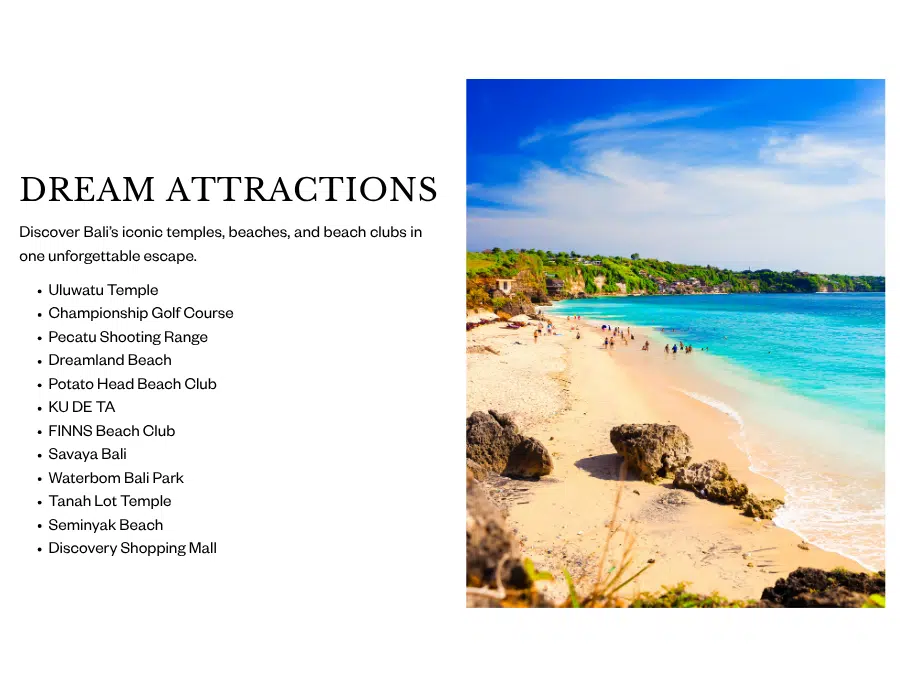
- Lebih Beach has black sand lined with fishing boats and seafood warungs (local shops, stalls, kiosks, or restaurants) grilling the day’s catch. The beach stays quiet on weekdays, attracting locals rather than tour groups. Look closely to spot flecks of mica in the volcanic sand, catching the sunlight like nature’s confetti.
- Pesinggahan Beach and Kusamba Beach extend the coastline south, where traditional salt farming continues as it has for generations. Watch farmers rake seawater into shallow beds, then scrape the resulting salt crystals into woven baskets.
Wyndham Garden Kuta Beach Bali
Wyndham Garden Kuta Beach Bali is located at one of Bali’s most famous stretches of sand, but wander a little inland and you’ll discover Kuta’s quieter and more creative side.
- Jalan Benesari and nearby lanes are lined with independent cafés, surf shops, and murals that give Kuta a more creative, laid-back vibe.
- Tanah Lot is home to one of Bali’s most famous sea temples. It sits on a rocky outcrop just off the coast. Visiting at sunset reveals breathtaking ocean vistas, the sound of waves, and a profound sense of spirituality as the temple’s silhouette stands out against the horizon.
- Denpasar Art Centre and Pasar Kreneng Night Market in the city show Balinese creativity through dance performances, traditional crafts, and street food.

Heritage Towns Where History Lives
These are some of the best travel destinations in Indonesia for those who want authentic cultural experiences beyond the usual tourist trail.
- Yogyakarta, Java
Often called the cultural heart of Java, Yogyakarta is home to centuries-old sultanate palaces (kraton), Hindu-Buddhist temples, and world-renowned batik workshops. The city is a hub for artisans producing handcrafted silver jewellery, puppets, and intricate batik fabrics.
Beyond the city, Borobudur and Prambanan temples, both UNESCO World Heritage sites, provide a glimpse into Indonesia’s Buddhist and Hindu civilisations. Back in town, slow things down along Malioboro Street, where snack stalls, textile shops, and street performers keep the energy lively. Culinary highlights include gudeg, a sweet jackfruit stew often paired with rice and chicken, reflecting the city’s royal cooking heritage.
- Bukittinggi, Sumatra
Set in the highlands of West Sumatra, Bukittinggi combines scenic landscapes with deep-rooted culture. The city centre features colonial-era clock towers, fort remnants, and market squares. Jam Gadang, the iconic clock tower, is a landmark that doubles as a hub for local events.
Minangkabau culture is deeply embedded here, especially visible in rumah gadang, traditional houses with distinctive curved roofs resembling buffalo horns. Markets offer local crafts, textiles, and culinary delights such as rendang, a spicy beef dish, and lapek bugih, a traditional snack made from rice flour and coconut. Bukittinggi’s location in the highlands also provides access to Ngarai Sianok Canyon, a scenic valley perfect for short hikes.
- Bandung, West Java
Bandung is the capital of West Java and it sits in a cool volcanic basin, making it a popular retreat from the tropical lowlands. The city is celebrated for its art deco buildings, restored colonial facades, and vibrant creative scene that includes street art, independent cafés, and art studios.
Neighbourhoods like Braga and Dago showcase galleries, boutique shops, and local artisan products. Bandung is also known for its culinary diversity, ranging from traditional Sundanese food such as nasi timbel (steamed rice wrapped in banana leaves) to fusion dishes. Surrounded by mountains and tea plantations, the city offers opportunities for day trips to volcanic peaks, waterfalls, and scenic highland villages.
- Malang, East Java
Malang combines colonial-era streets with brightly painted villages that have become community-led art projects. Villages like Kampung Jodipan showcase murals and street art, which bring new life to traditional neighbourhoods. Just outside the city, rolling highlands are dotted with coffee estates offering plantation tours and tastings of local beans. Malang’s cooler climate makes exploring easy.
Local cuisine includes bakso Malang, meatball soup served with noodles and fried wontons, and traditional snacks sold in city markets.

Hidden Gems in Heritage Towns Near Wyndham Properties
Wyndham Opi Hotel Palembang
Wyndham Opi Hotel Palembang is located in South Sumatra’s capital, where the Musi River has shaped trade and culture for centuries. The city retains its multicultural character through architecture and communities that blend Chinese, Malay, and Dutch influences.
- Kampung Kapitan presents 15 traditional houses combining Chinese, Malay, and European architectural elements. The neighbourhood developed when Dutch colonisers appointed Chinese naval captains to manage trade. Today, timber houses stand as living museums where families maintain traditional layouts and decorative details.
- Pulau Kemaro Island rises from the Musi River, home to a nine-story pagoda built in 2006 and the Hok Tjing Rio Temple from 1962. Local legend tells of forbidden love between Prince Tan Bun An and Princess Siti Fatimah, whose tragedy supposedly created the island. Fast boats make the 30-minute journey from the riverfront, offering views of Palembang’s industrial and historic zones.
- The culinary scene centers on pempek, fish cakes served in a tangy, vinegar-based sauce, which locals eat throughout the day.
Wyndham Surabaya City Centre
Wyndham Surabaya City Centre is in Indonesia’s second-largest city, Surabaya, where colonial architecture frames modern development.
- The old streets reveal photogenic lanes lined with coffee stalls and street murals that document local history.
- Local specialty rawon, a black beef soup coloured with keluak (a type of nut), is a popular choice throughout the city.
- Coffee culture runs deep here, with both traditional and specialty cafés serving beans from nearby estates.
City Secrets Worth Finding
Indonesia’s major cities offer more than just shopping malls and business districts. Hidden neighbourhoods, cultural villages, and local art spaces reveal a city’s authentic character, providing visitors with immersive experiences beyond the usual tourist trails.
Semarang
Semarang, Central Java’s port city, offers a mix of Dutch colonial architecture and Javanese traditions. Semarang Chinatown (Kota Lama) is a living heritage area with narrow streets, Chinese temples, and colonial-era shophouses. Cafés and small galleries have revitalised the area, while local markets sell traditional snacks and crafts.
Landmarks like Lawang Sewu, a former Dutch administrative building, and Blenduk Church, one of the city’s oldest churches, highlight Semarang’s unique architectural blend. Walking tours reveal the layers of Javanese-Dutch culture that shaped the city over centuries.
Denpasar
Denpasar is Bali’s capital, and it is often overlooked by tourists in favour of nearby beaches, but it offers a window into authentic Balinese daily life. Badung Market bustles with vendors selling fresh produce, spices, and local delicacies, providing a sensory immersion in local culture.
Temples like Pura Jagatnatha host daily rituals and ceremonies that often go unnoticed by visitors. Observing these rituals offers insight into Bali’s spiritual life, where offerings, prayers, and community participation are an integral part of everyday existence.
Small museums and galleries scattered around the city further document Balinese art, history, and craft.
Hidden Gems in Jakarta Near Wyndham Properties
Wyndham Casablanca Jakarta
Wyndham Casablanca Jakarta provides access to the capital’s lesser-known cultural sites, with beautiful neighbourhoods that are worthy of exploration.
- Setu Babakan Cultural Village preserves Betawi traditions, the indigenous culture of Jakarta, and traditional houses showcase architectural styles including joglo and kebaya designs. Gambang Kromong music and Ondel-ondel puppet dances take place in the village square on weekends, where food stalls serve Betawi specialties like kerak telor, a spicy omelette made with glutinous rice, and toge goreng, fried bean sprouts with noodles.
- Kampung Bangka is a tucked-away neighbourhood with old temples, heritage shophouses, and family-run cafés that have served locals for generations. The area blends Thai, Chinese, and Indonesian communities, creating a unique atmosphere.
- Galeri Indonesia Kaya celebrates Indonesian performing arts through multimedia exhibitions and live performances. The gallery sits in the Grand Indonesia mall, making it easily accessible.

Planning Your ‘Hidden Gems’ Trip in Indonesia
10-day itinerary: East to West
- Days 1 to 3: Settling in and coastal relaxation
Start your journey by settling in at Wyndham Garden Kuta Beach Bali or Wyndham Tamansari Jivva Resort Bali and visit Dreamland and Bingin beaches to relax and unwind. On day two, take a boat to Nusa Penida for Kelingking Beach and Angel’s Billabong. Explore Tirta Gangga Water Palace and Tenganan Village on day three. - Days 4 to 5: Heritage and sunrise views
Fly to Surabaya and check in at Wyndham Surabaya City Centre. Spend day four on the heritage trail and try rawon. Depart pre-dawn for Mount Bromo’s sunrise viewpoint on day five, where you can watch volcanic peaks emerge from the clouds. - Days 6 to 8: Culture and riverside discoveries
Move on to Wyndham Opi Hotel Palembang on day six. Cover the Ampera Bridge and the Sultan Mahmud Badaruddin II Museum on day seven and take a boat to Pulau Kemaro Island and explore the riverside neighbourhoods on day eight. - Day 9: Urban exploration in Jakarta
Transfer to Wyndham Casablanca Jakarta. Explore Kota Tua’s colonial streets, where Dutch-era architecture lines the cobblestone roads, before visiting Museum MACAN, which showcases contemporary Indonesian and international art. Later, head to Pantai Indah Kapuk (PIK) to experience its youthful, vibrant atmosphere, and waterfront dining scene. - Day 10: Last-minute shopping and departure
Shop at Senayan City or Grand Indonesia before your flight.

Your Next Indonesian Adventure
Indonesia reveals itself slowly to those willing to look beyond the obvious. These are the best travel destinations in Indonesia, for travellers who want more than photo ops, places shaped by conversations with weavers, meals at family-run warungs, and quiet mornings at uncrowded beaches.
Plan your next adventure with Wyndham’s properties across Indonesia and discover the archipelago one hidden gem at a time.
FAQs
What are some hidden gems for offbeat travel adventures in Indonesia?
If you’re willing to look beyond Bali, Indonesia opens up beautifully. Think swimming alongside sea turtles in the Derawan Islands, wandering granite-studded shores in Belitung, diving some of the world’s richest reefs in Wakatobi, or soaking up layered history in heritage cities like Palembang and Surabaya.
Where to go in Indonesia that’s not Bali?
Plenty of places quietly steal the spotlight. Sumatra offers Belitung’s beaches and Bukittinggi’s highland culture. Kalimantan is home to the Derawan Islands. Sulawesi boasts Wakatobi’s underwater wonders. Over on Java, cities like Yogyakarta, Bandung, and Malang feature history, creativity, and cooler climates.
What are some unique things to do in Indonesia?
You can learn the double ikat weaving technique in Tenganan, swim with turtles in Derawan, explore Chinese-Malay heritage houses in Kampung Kapitan, watch age-old salt farming in Kusamba, or photograph Belitung’s sculptural granite beaches. These are experiences that stay with you long after the flight home.
When is the best time to visit hidden gems in Indonesia?
For most regions, April to October brings drier weather, which is ideal for beaches, diving, and temple visits. November to March sees more rain, though some areas like Raja Ampat are better during these months.
What are some hidden food gems in Indonesia?
Try pempek (fish cakes) in Palembang, rawon (black beef soup) in Surabaya, kerak telor (spicy omelette) in Jakarta, and freshly grilled seafood at Lebih Beach warungs. In Indonesia, some of the best memories are served on a plate.
Reference:
¹ Indonesia sees significant tourism growth in 2024 with 13.9 million foreign visitors. (2025, March 7).

Share this Post